

State Admits Significant Gaps in Voter Roll Compliance Efforts
In the lead-up to the 2025 elections and beyond, concerns over the integrity of voter registration lists have intensified across the United States. New Jersey, with its mixed centralized/decentralized election administration model, has come under scrutiny through a series of legal challenges brought by the Republican National Committee (RNC). A key document from the state's response in one such case reveals candid admissions about what New Jersey does not do to maintain its voter rolls—admissions that raise questions about the robustness of its efforts under federal laws like the National Voter Registration Act (NVRA) and the Help America Vote Act (HAVA).
While the state insists its system meets minimum requirements, the disclosures highlight a reactive, limited approach that relies heavily on county-level actions without broader integrations or proactive measures.
This article examines these admissions in detail, drawing from the New Jersey Division of Elections' July 29, 2025, response to the RNC's records requests. As background, we'll first summarize the case filings and the minimal list maintenance activities the state acknowledges performing to align with federal mandates.
Background: The RNC Lawsuit and New Jersey's Response
The dispute began in early 2025 when the RNC submitted records requests to the New Jersey Division of Elections under the NVRA and New Jersey's Open Public Records Act. On March 25, 2025, the RNC sought 16 categories of documents related to voter roll maintenance, including programs for ensuring list accuracy, records of removals for reasons like death or relocation, and communications with other agencies. A follow-up request on June 16, 2025, focused on voter-requested removals and related notices.
The Division partially responded on July 11, 2025, providing lists of deleted and inactive voters. However, alleging a lack of full compliance, the RNC filed a complaint on July 17, 2025, in Mercer County Superior Court (Docket No. MER-L-1499-25: Republican National Committee, Inc. v. State of New Jersey, Department of State, Division of Elections). The suit accused the Division of failing to disclose records essential for evaluating the state's voter list maintenance, potentially violating transparency requirements under the NVRA and OPRA. The RNC sought an order compelling production and declaring the state's inaction unlawful.
In a letter dated July 29, 2025, the Division issued a "full and final response, "producing additional records while objecting to many requests as overbroad or infeasible. Citing OPRA's provision for dismissal, the state requested the court dismiss the case without prejudice. The response, spanning 17 pages, detailed objections and explanations, reserving defenses like the validity of the requests under OPRA. The case did not end there. By November 2025, the RNC escalated its efforts, filing additional lawsuits against New Jersey Secretary of State, Tahesha Way, and others, again seeking voter records and alleging non-compliance with transparency laws.
These included a November 17, 2025, challenge over voter list maintenance records and an October 2025 suit for ballot drop-box footage in Burlington County.
As of January 2026, these related actions appear ongoing, with no reported final resolutions in public records, underscoring persistent tensions over election transparency in the state.
Minimal List Maintenance: Meeting Federal Baselines Through the SVRS
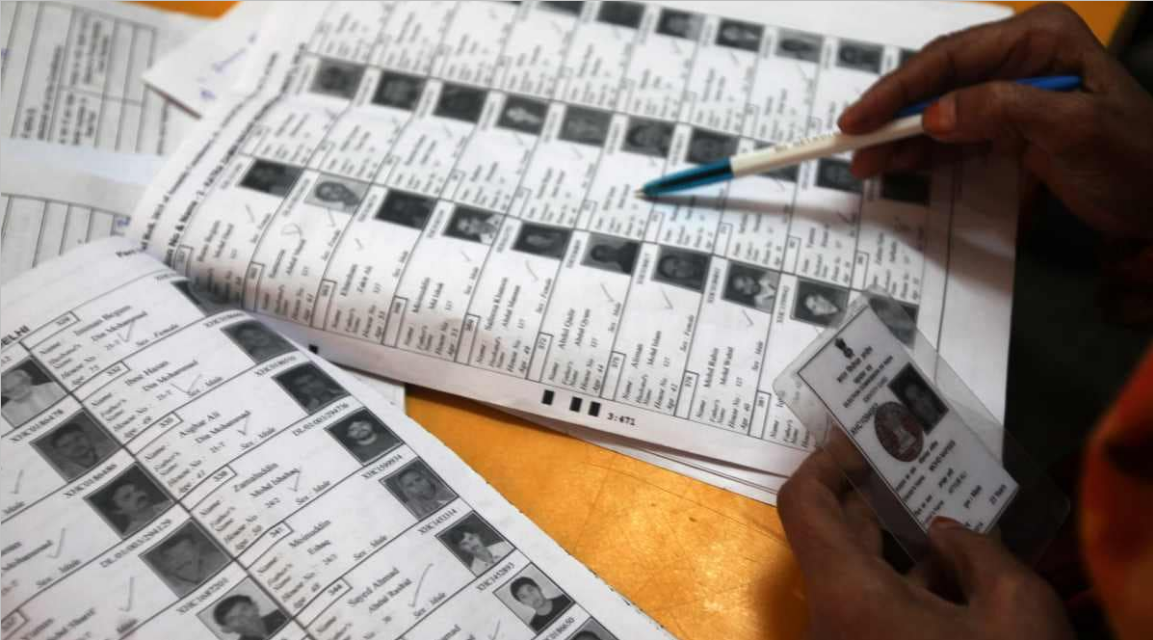
Federal laws set foundational requirements for voter list maintenance. The NVRA mandates that states make "reasonable efforts" to remove ineligible voters from rolls due to death, relocation, felony convictions, or inactivity (e.g., after two federal elections without voting or responding to notices). HAVA complements this by requiring a computerized statewide voter registration list (Section 303) to ensure accuracy and prevent duplicates. In its response to the RNC, New Jersey admits to a "general program" centered on the Statewide Voter Registration System (SVRS), a state-owned database programmed to comply with these laws. The Division describes SVRS as the backbone of maintenance, with counties (via commissioners of registration) handling actual updates and deletions. Key admitted activities includ
- Removals and Deletions: Voters are deleted for reasons such as death (using raw data files from the Department of Health, reviewed by counties), relocation (possibly via Motor Vehicle Commission data), felony convictions, duplicates, and inactivity after two federal elections. The state provided lists of deletions from March 2023 to July 2025 and all inactive voters post-2022 election.
- Address Confirmations: Counties send notices via SVRS, tracking responses in individual voter histories, with non-responders potentially marked inactive or removed per N.J.S.A. 19:31-15.
- Data Sharing: Limited integrations, like forwarding individual voter documents from state agencies to counties for investigation. The state is a member of the Electronic Registration Information Center (ERIC) but notes it is "not yet implemented."
- Complaint Handling: Case-by-case responses to reports of inaccuracies, often routed to counties or SVRS support.
These efforts are framed as minimally sufficient: SVRS automates compliance with statutes like N.J.S.A. 19:31-16 (deceased removals) and 19:31-17 (incarcerated voters) only after the counties have sorted through the raw death data from the NJ Department of Health and sourced their own incarceration data, supposedly fulfilling HAVA's statewide system requirement and NVRA's "reasonable effort" standard through decentralized, statute-embedded processes.
The Core Issue: What New Jersey Admits It Does Not Do
While the state touts SVRS as a compliant tool, the July 29 response is rife with admissions of inaction, revealing a system that falls short of best practices and lacks proactive, integrated measures. These gaps undermine the "reasonable efforts" demanded by the NVRA, allowing ineligible voters to linger on rolls longer than necessary.
Below, we highlight the most significant admissions, grouped by category
- No Comprehensive Reporting or Data Compilation. The Division repeatedly cites SVRS limitations to deny requests for aggregated data, admitting it cannot generate certain reports without manual, burdensome efforts—contrary to OPRA's intent but highlighting systemic deficiencies
- No lists of voters sent address confirmations, those who responded or did not, or dates voters were made inactive. While confirmations are tracked per voter, SVRS lacks a report to compile this centrally, making oversight of inactivity processes opaque.
- No compilation of complaints about roll inaccuracies or responses thereto, as this would require subjective review of records, deemed "infeasible."No compilation of complaints about roll inaccuracies or responses thereto, as this would require subjective review of records, deemed "infeasible.
These admissions suggest a lack of tools for monitoring maintenance effectiveness, potentially violating HAVA's emphasis on accurate, auditable lists.
Limited or Absent Data Integrations and Sources
New Jersey concedes it does not leverage many available data sources for cross-checking, relying instead on sporadic, state or county-level inputs that counties must manually verify:
- No receipt of deceased voter data from federal agencies like the Social Security Administration (SSA), U.S. Postal Service (USPS), U.S. Citizenship and Immigration Services (USCIS), Department of Homeland Security (DHS), or Department of Justice (DOJ). Similarly, no such data from state entities like Corrections, MVC, or Judiciary (beyond Health Department files).
- No information on relocations or address changes from Health, Corrections, Judiciary, SSA, USPS, USCIS, DHS, DOJ, or federal judiciary—though MVC might provide some, the request was denied as overbroad.
- No criminal conviction data from Health, MVC, Judiciary, SSA, USPS, USCIS, DHS, DOJ, or federal judiciary or Corrections.
- Critically, no data on non-citizenship from any listed agencies, leaving a potential gap in identifying ineligible registrants.
- No integrations with key national systems: National Change of Address (NCOA) database, Systematic Alien Verification for Entitlements (SAVE), Social Security Death Index (SSDI), or National Association of Public Health Statistics and Information System (NAPHSIS). ERIC membership exists but is unimplemented, missing opportunities for interstate duplicate detection.
This isolation contrasts with states like Pennsylvania, which actively use ERIC and NCOA for proactive cleanups, and could hinder NVRA compliance by limiting "reasonable efforts" to remove movers or deceased voters.
No Cross-Checks or Comparisons with Other Records
The state admits to no use of external datasets for validation:
- No comparisons of voter rolls to juror questionnaires or jury pool records, citing no statutory requirement and confidentiality under court rules (R. 1:38-5(g)).
This omission foregoes a common method for spotting duplicates, inaccuracies or non-citizens, potentially allowing errors to persist.
Absence of Proactive Oversight and Enforcement
Beyond data gaps, the Division reveals a hands-off approach to ensuring state wide consistency:
- No standalone documents on "programs and activities" for list accuracy beyond SVRS and statutes—maintenance is `"embedded" in the system, not actively documented or evaluated.
- No notices to counties for non-compliance with maintenance obligations, implying no formal enforcement mechanism.
- No reports from counties on implementing removals for ineligible voters (e.g., deceased, relocated, felons, duplicates, non-citizens).
- No comprehensive searches for communications with agencies or counties, denied as overbroad due to lacking specific parameters.
These admissions paint a picture of a passive system designed to tolerate an unknowable level of voter roll inaccuracies: Counties act independently without centralized auditing, potentially leading to uneven maintenance across New Jersey's 21 counties.
Implications for Election Integrity
New Jersey's disclosures in the RNC case underscore a minimalist compliance strategy that may meet federal thresholds on paper but lacks the integrations and tools for serious, robust, proactive maintenance. With over 6 million registered voters, these gaps undoubtedly contribute to inflated rolls, as seen in national debates over election security.
As related lawsuits continue into 2026, advocates for transparency argue that full implementation of tools like state and federal data sharing is essential—not optional—to truly safeguard the vote.
For New Jersey residents concerned about election integrity, these admissions highlight the need for reform. Until then, the state's voter rolls remain a patchwork of county efforts, with significant blind spots acknowledged by officials themselves.